Squeezing Worms
Why the narrowest paths are sometimes the fastest
We usually take it for granted that a wide, open path is the fast one. It is easier to run down an empty hallway than through one that has narrowed to a crawlspace, easier to bike along an open road than through a crowded market, and when we are hurrying out of a building we head straight for the widest door we can find. Open space feels like the freedom to move, and a tight space feels like something that holds us back.
But most living things never get to move through open space. A California blackworm spends its life down in the wet, packed grains of a streambed. A protein filament threads its way through the crowded, gooey interior of a living cell. A snake pushes headfirst through soil and leaf litter, taking whatever narrow gaps it can find. For these long, slender, flexible bodies, moving through the world means squeezing through tight openings, tiny pores, and tangles of roots and debris, and it seems only natural that the tighter the space, the harder and slower the going should be.
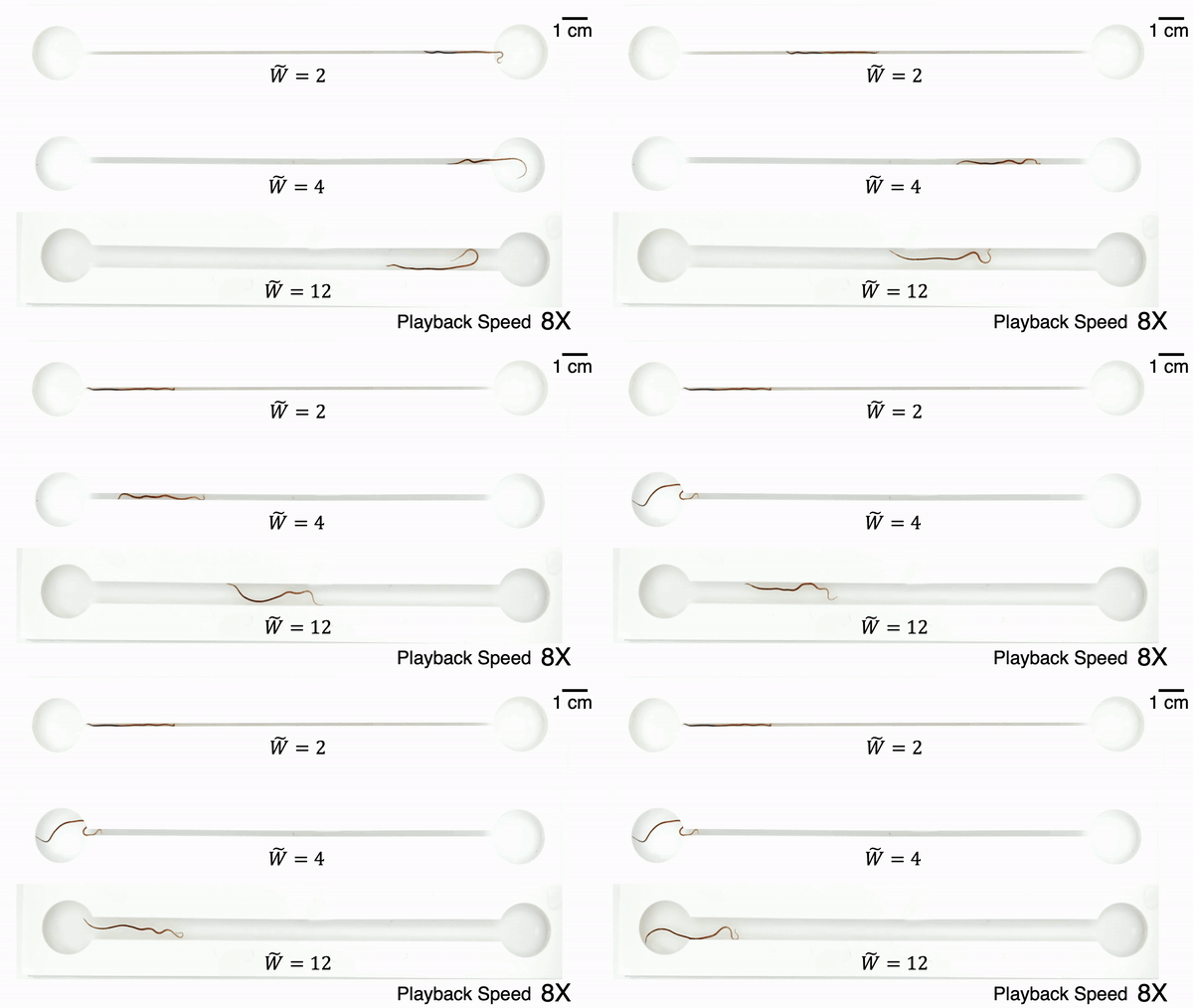
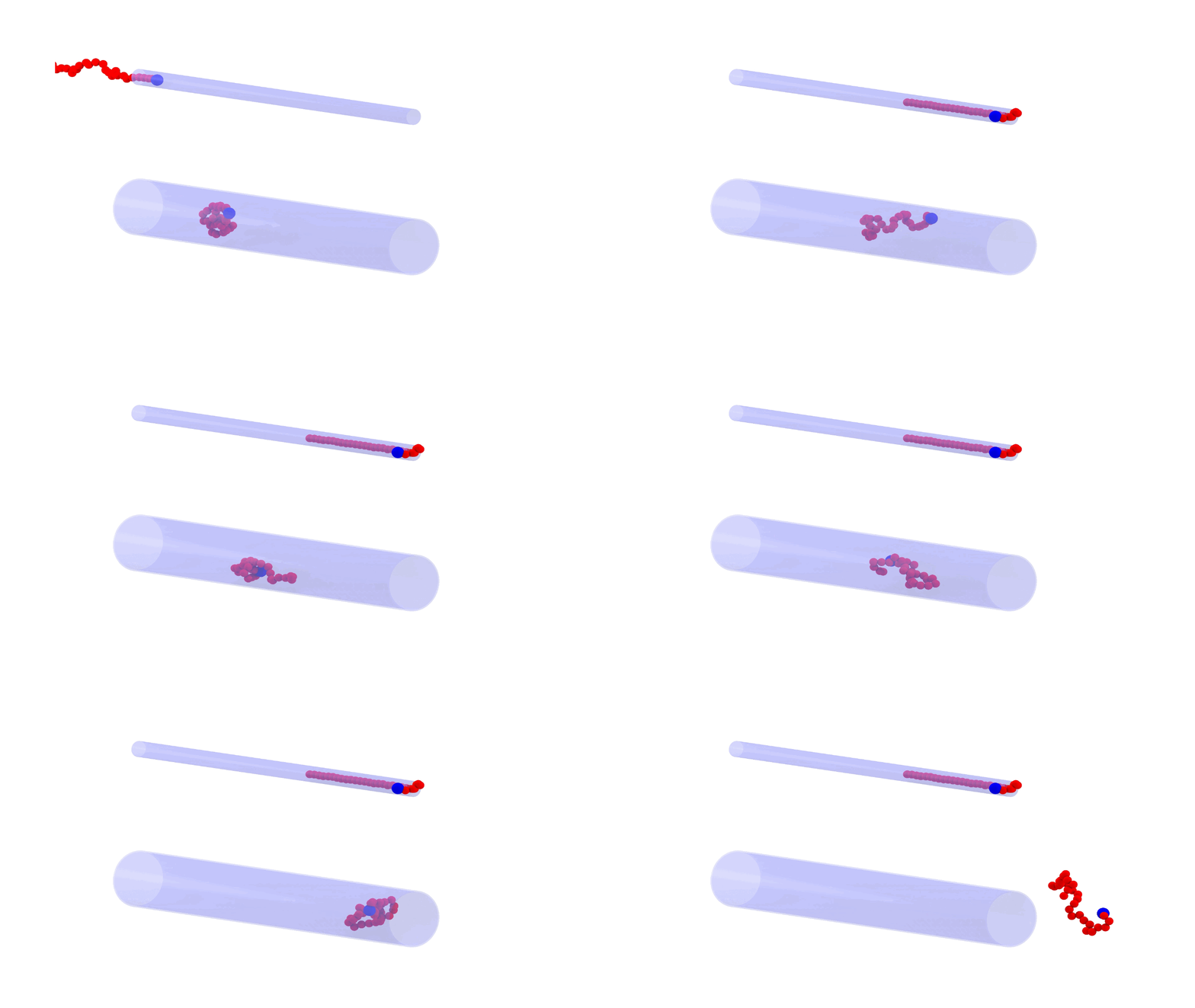
Living blackworms escaping open-ended channels of increasing width. Narrow channels, top; wide channels, bottom.
We wanted to know whether that expectation actually holds for what physicists call active filaments: long, flexible bodies that move on their own, without any legs, simply by pushing themselves forward.
Working with living California blackworms alongside computer simulations of self-propelled polymers, we watched how these filaments made their way through channels of many different widths, from openings barely wider than the body itself to channels several times wider. To our surprise, the narrowest channels were not the hardest ones to get through. They turned out to be the easiest. Again and again, an active filament escaped a tight channel faster than a roomy one.
More surprising still, the whole story comes down to a single number: the width of the channel squared, divided by how stiff the filament is. It sets how much room the filament has to wander from side to side against how strongly it resists bending. In our computer simulations, where we can tune both the width and the stiffness, every case we ran falls onto a single curve when plotted against this number, and the living worms follow the same trend.
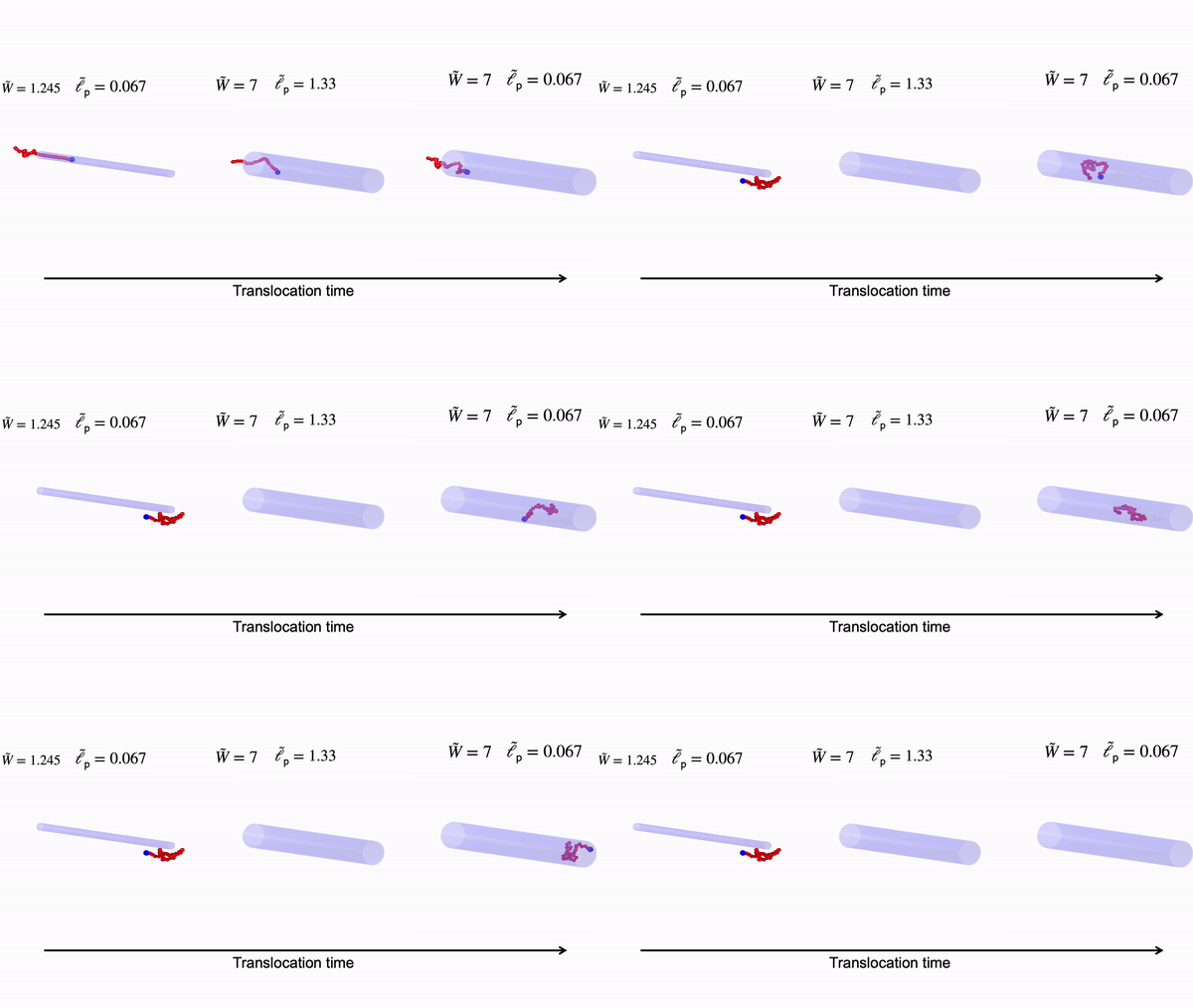
Simulated active filaments translocating through channels. Narrow confinement or higher stiffness keeps the body aligned and quick; a wide, flexible case bends and reorients, drawing out the escape.
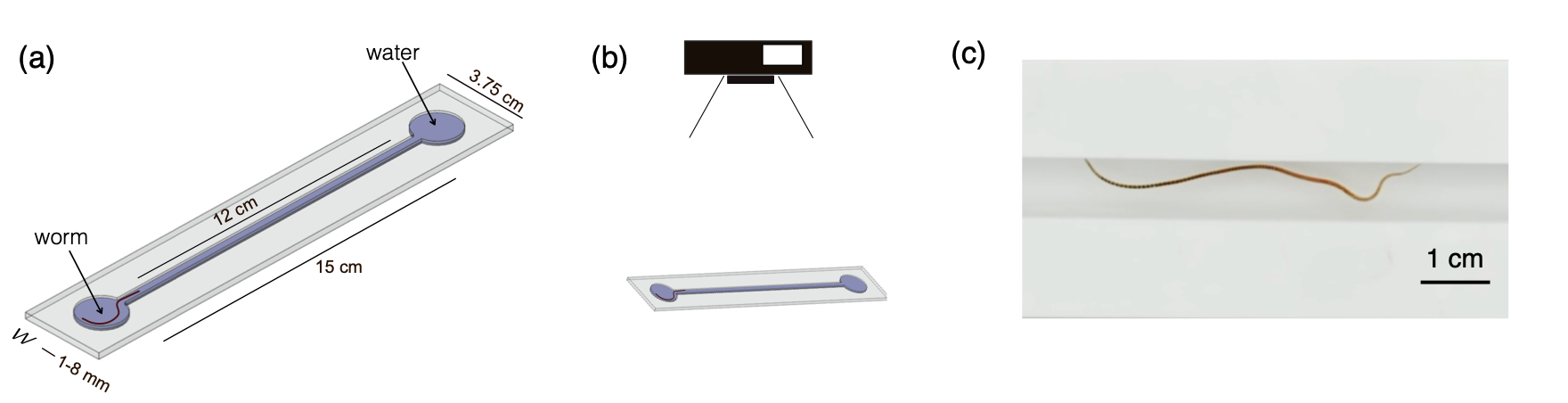
Schematic of experimental setup during worm translocation.
Major questions
How does confinement affect the movement of active, flexible filaments?
How do a filament’s flexibility and it’s own self-propulsion combine to decide how it moves in tight spaces?
Is there one physical rule that predicts when confined filaments shoots straight through or when it gets tangled up?
What we’ve discovered
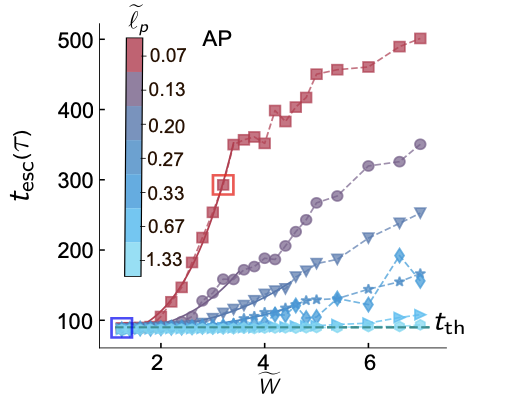
Confinement speeds up escape
The narrower the channel, the faster the filament gets out. A blackworm crosses a channel twice its body width in about a minute, but takes roughly five times longer when the channel is four times wider. Both the worms and the simulations show this, and it is the opposite of passive polymers like DNA, which only slow down as the space gets tighter.
Two ways through: glide or wander
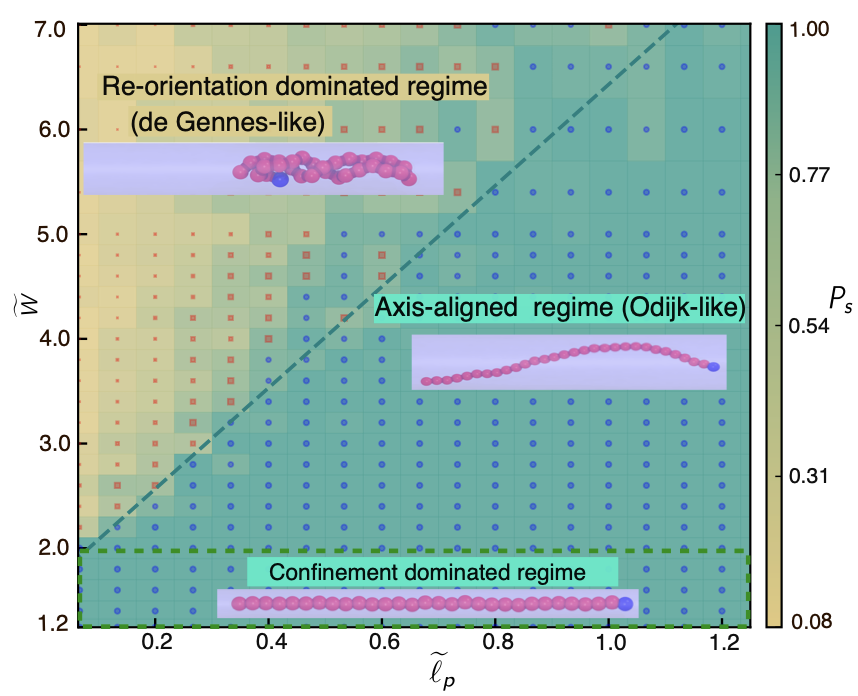
In a narrow channel the walls hold the filament straight, and it drives itself through at a speed set only by its own push, whether it is stiff or flexible. In a wider channel it starts to bend and change direction, and all that turning slows it down. Physicists call these two behaviors the Odijk regime (straight and aligned) and the de Gennes regime (bending and turning).
One number predicts the motion
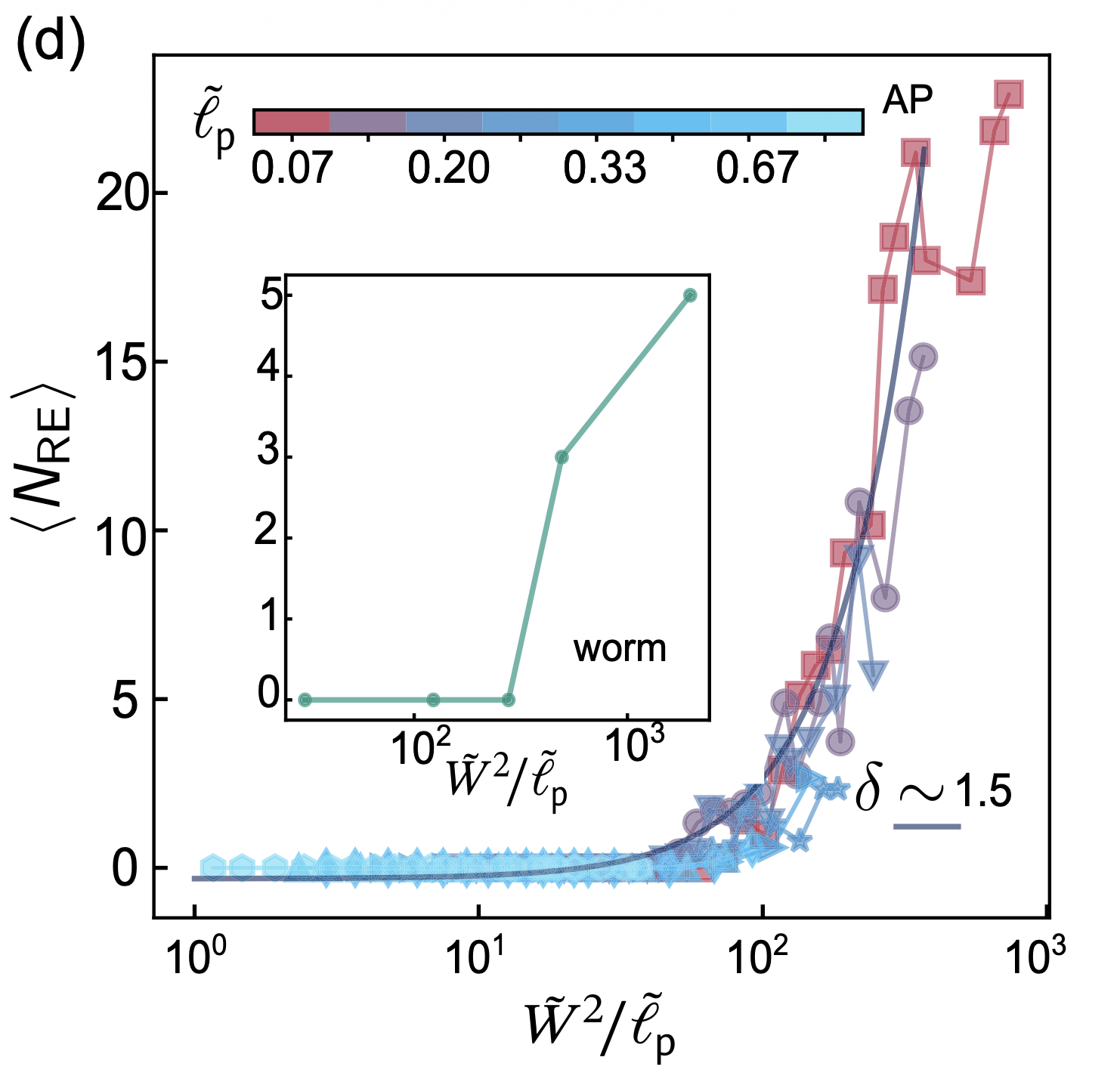
All of it comes down to one number: the channel's width squared, divided by the filament's stiffness. When the number is small the filament stays straight and escapes quickly; when it is large the filament turns often and slows down. Plot any of our cases against it, worm or simulation, narrow or wide, stiff or flexible, and they all land on the same curve.
The worm moves in fits and starts
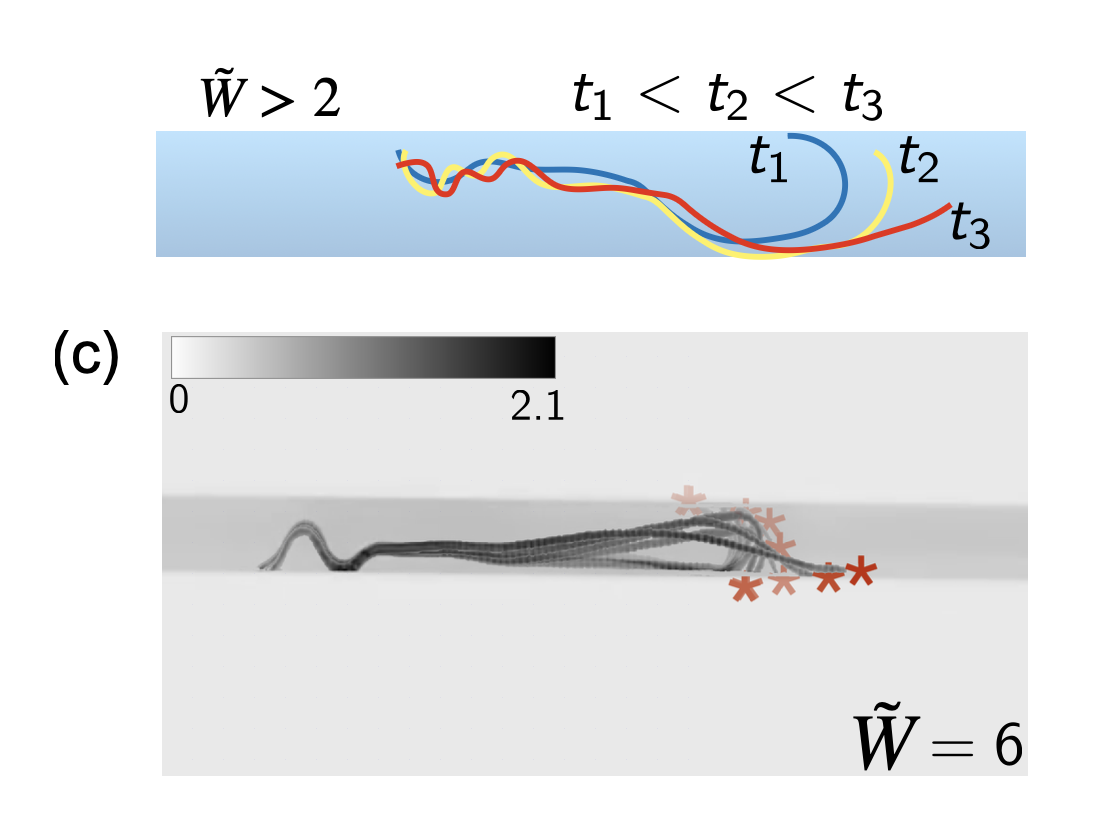
A blackworm does not move at a steady pace. It lunges forward, pauses to swing its head around, then lunges again, a stop-and-start rhythm it keeps even in open water. A narrow channel cuts those pauses short and keeps the worm moving forward, while a wide one lets them stretch out until it barely advances.
A map for getting through
In a narrow channel, every filament makes it out, stiff or flexible. In a wide one, only the stiffer filaments escape reliably, while the flexible ones get lost in their own turning and often never leave. A single line, set by the filament's stiffness and the channel's width, divides the two and gives a simple design rule.
Why this work Matters
This could matter as engineers build soft robots to feel their way through pipelines, through the rubble of collapsed buildings, through the tortuous veins and arteries of our own bodies. Faced with a tight space, the intuition is always to clear more room. Our worms suggest the opposite can be true: a well-shaped tight space does some of the navigating for you, as long as the body moving through it is matched to the space it has to cross.
Read the paper
Active polymers translocate faster in confinement. PRL (2026)